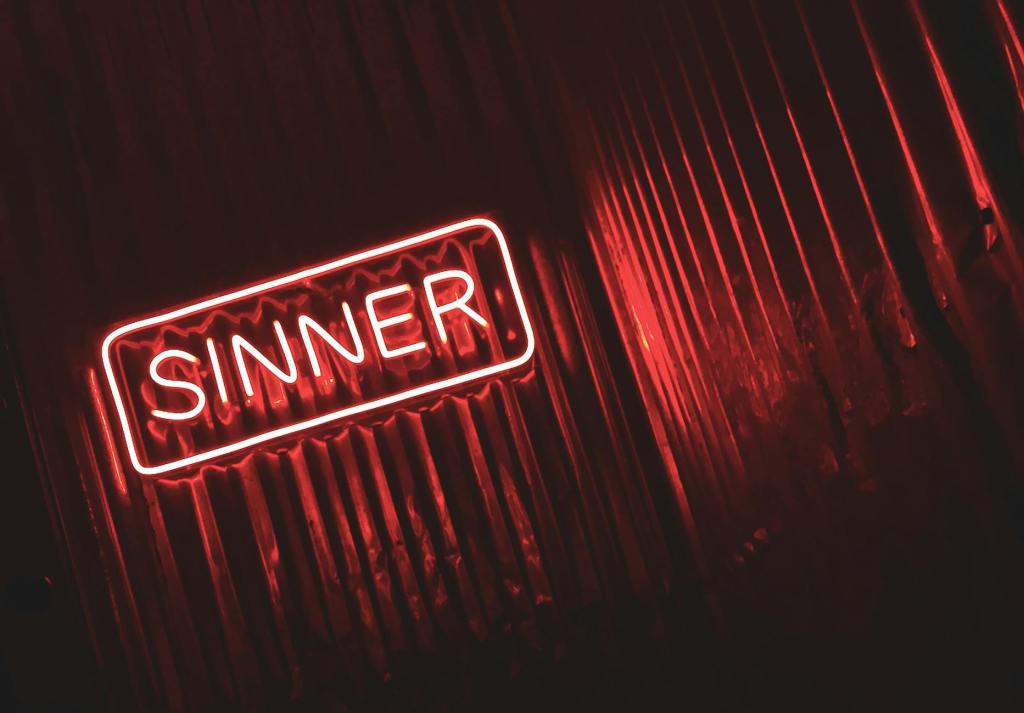
When Ryan Coogler’s Sinners hit theatres this spring, I expected style, atmosphere, and a dose of supernatural dread. What I didn’t expect was a politically charged, allegorical horror epic that tackles cultural appropriation, the cycles of colonization, and the politics of assimilation—all set to the raw pulse of 1930s juke joint blues. This film doesn’t just scare you—it interrogates you.
Plot Recap (No Major Spoilers)
Set in Mississippi in 1932, Sinners follows twin brothers Smoke and Stack Moore (both played masterfully by Michael B. Jordan), WWI veterans and former Chicago gangsters, as they return to their hometown to open a juke joint. What starts as a story about music, community, and second chances quickly transforms into a battle against a supernatural evil: Remmick, a vampiric white music producer with a chilling interest in Black talent—and blood.
Bloodsuckers and Culture Thieves: Vampirism as Metaphor
The vampires in Sinners aren’t just monsters—they’re metaphors. Remmick, the film’s primary antagonist, feeds on Black artists, both literally and figuratively. He represents the parasitic forces of white supremacy and cultural appropriation, echoing historical realities where Black musicians were robbed of credit, royalties, and legacy while white performers reaped the rewards.
But Coogler goes even deeper. Remmick is Irish—a fascinating and deliberate choice. The film seems to be asking: what happens when the formerly oppressed become complicit in systems of domination? Remmick’s character reflects how trauma when turned inward or unchecked, can become a mechanism of violence. The immigrant who once fled colonization now becomes a colonizer, feeding off the culture of others to survive.
“All the Music is Irish”: Assimilation and Erasure
One of the more subtle—and chilling—moments in the film is how the music at the juke joint slowly shifts. What begins as authentic Black blues morphs into something Irish-inflected, manipulated by Remmick’s influence. This isn’t just a musical choice; it’s a metaphor for the way dominant cultures absorb and dilute marginalized ones, turning vibrant traditions into marketable “sameness.”
Music in Sinners is not just sound—it’s a conduit of spiritual lineage. It carries ancestral memory and collective resistance, serving as a powerful symbol of Black cultural heritage. When Remmick changes the tune, he’s not just remixing songs—he’s trying to rewrite history, erasing the spiritual connection that the music represents.
The Choctaw: Presence, Power, and Vanishing
Early in the film, a group of Choctaw vampire hunters appears, offering cryptic guidance and warnings. Their presence is brief—but loaded. The Choctaw, as Indigenous people, are depicted as holders of suppressed knowledge, protectors of the land, and survivors of ancient harm. Their role in the film evokes these ideas, highlighting the often-overlooked resilience and wisdom of Indigenous communities.
But they vanish, and their knowledge remains largely unspoken. This mirrors a broader issue: how colonial narratives often marginalize Indigenous presence, even in stories set on stolen land. Their disappearance speaks volumes—it’s an absence that haunts the film like a ghost.
The Horror of Assimilation
In Sinners, becoming a vampire isn’t just a curse—it’s a temptation. Several Black characters are offered power, safety, and even fame in exchange for assimilation into the vampiric order. This mirrors how marginalized people are often forced to navigate systems that demand they give up parts of themselves to “succeed.” The question is: what do you lose when you become part of the system that once oppressed you?
Coogler resists easy answers. Some characters embrace the dark. Others resist. But the stakes are clear: assimilation, in this world, isn’t a neutral choice—it’s an act of spiritual violence.
Historical Context: Jim Crow Gothic
The setting—1932 Mississippi—is no coincidence. The film draws on the very real racial terror of the Jim Crow South, where Black communities created spaces of joy, music, and resistance under constant threat. The jukejoint is a sacred space, a site of refuge and rebellion. It becomes the heart of the battle—not just between good and evil, but between cultural preservation and erasure.
By setting the film in this period, Sinners taps into a distinctly American gothic tradition—one haunted by racism, war, and the unresolved trauma of slavery. But unlike traditional Southern gothic, Coogler centers on Black agency, reclaiming the genre as a space for resistance rather than victimization. The film’s portrayal of Black characters as active agents in their narratives is a significant departure from the typical victimization often associated with the gothic genre.
Conclusion: Horror as Historical Reckoning
Sinners is not a perfect film—it’s dense, sometimes disjointed, and occasionally under-explains key elements (like the Choctaw mythology). But it’s ambitious, unflinching, and deeply urgent.
This is horror that doesn’t just aim to entertain—it seeks to teach, provoke, and unsettle. It asks: Who gets to tell the story? Who gets remembered? And what happens when the bloodlines of culture are drained dry?
Ryan Coogler has crafted a film that dares to bite back. And in doing so, Sinners becomes something rare: a vampire film with a soul.


 Anxious Thoughts
Leave a comment