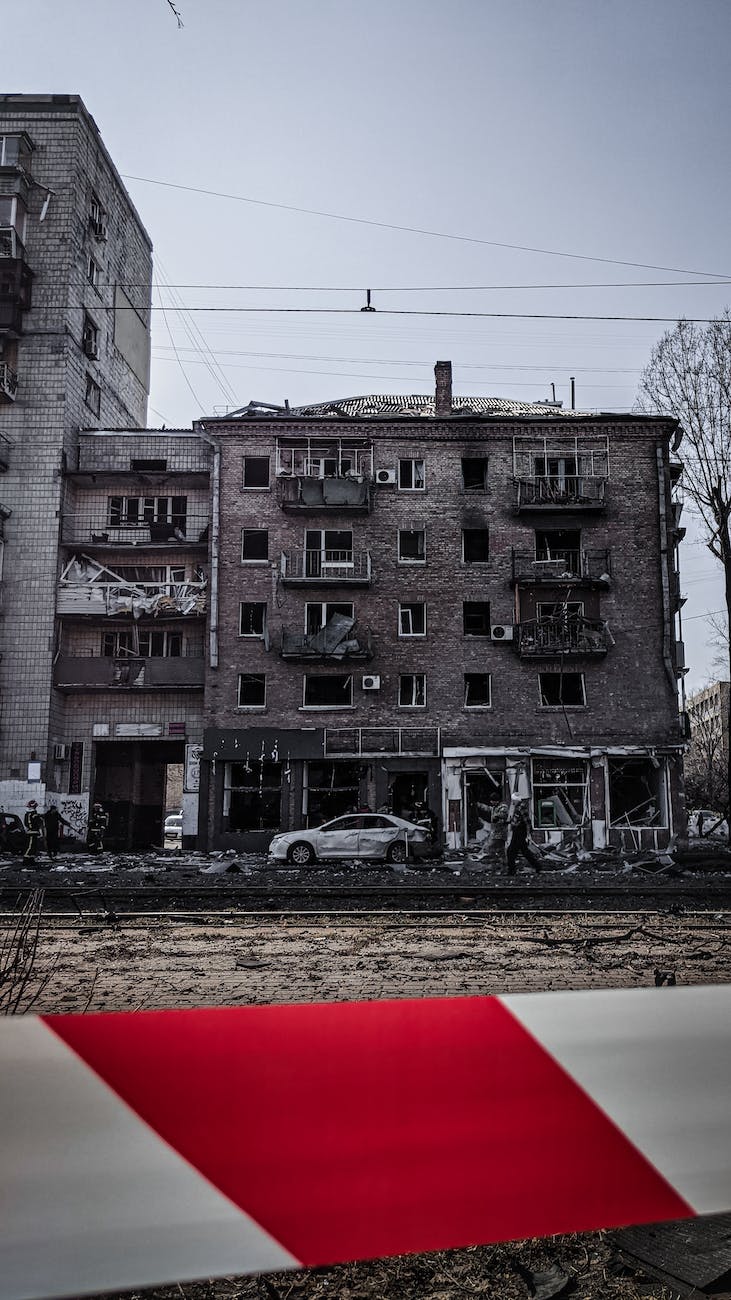
Excerpt from “Rebirth”
The scorching June nights were merciless, but my mother’s touch had a soothing effect. She would wave her hand in a futile attempt to create a cooling breeze, her compassionate heart driving her actions. However, her efforts were in vain against the relentless heat that plagued us that night in 2006. The neighbors leaned on their balconies, their exasperated voices echoing through the air, cursing the oppressive weather.
My father, clad in a white tank top and nylon shorts, opened every window in our apartment and slumped onto a sofa, resenting his very existence. The tension between my parents had reached its peak, transforming our once-peaceful home into a battleground where every word my brother and I uttered ricocheted back at us. We were instructed, or rather commanded, to maintain silence, for the suffocating heat provided enough disturbance for the night.
My mother, amidst the stifling atmosphere, lit a cigarette, inhaling deeply and exhaling a cloud of smoke that lingered in the air far too long. I recall coughing, choking on the fumes that intertwined with the uncertainty filling the room.
In the background, the faint voice of a news anchor permeated the space as my mother urged us to retreat to our playroom. At the tender age of seven, I had become skilled at deciphering my mother’s expressions. Each wrinkle on her face conveyed a message, and I could comprehend her thoughts with a mere arch of her eyebrow. That night, as she shooed us away from the living room, new lines etched themselves onto her forehead, accompanied by a rising volume from the television. She leaned forward on the sofa, her shoulders tense, revealing the strain on her jaw muscles. I couldn’t decipher this particular expression, yet a part of me begged to remain ignorant.
You don’t need to know. It’s safer for you not to know.
Dear reader, I implore you to proceed with caution, as the forthcoming events may evoke intense emotions.
I distinctly recall the horrifying sound that pierced the air when the first rocket soared above our house. It was a noise unlike any other—ominous, weighty, and bone-chilling. One couldn’t help but clench their bones and instinctively cover their ears.
Initially, I couldn’t identify the source of the sound, and my mind conjured images reminiscent of the cartoons I used to watch. Was there an evil villain? A superhero hurtling rocks through the sky? The Powerpuff Girls saving the world once again? My imagination ran wild, exploring any possibility a seven-year-old mind could fathom, anything except…
Israel bombing Beirut.
While the first rocket signaled concern to my parents, my brother and I didn’t find it as frightening as the urgency etched onto our parents’ faces. I overheard my parents whispering by the living room windows, their worry pulling my mother’s wrinkles downward, making her appear far older than her years. Eventually, they separated, retreating to different corners of the room to make frantic phone calls.
At that time, children like us didn’t fully grasp the concept of death. We were more preoccupied with the notion of pain. Would it hurt? That was the sole question dominating my young mind.
Soon thereafter, my aunt burst through the front door, shielding four children behind her as she limped into the living room. Amidst overlapping voices and the sobs of my older cousin, I struggled to comprehend the reason behind my aunt’s abrupt arrival.
To this day, I can still hear my aunt’s voice as she implored my brother, younger cousin, and me to watch cartoons in the adjacent room. I left behind my older cousin, gasping for air, her anguished cries echoing in my ears as my mother embraced her, while my aunt recited prayers. The heat became a secondary concern as the second rocket shook our house, causing me to tumble off the chair in my bedroom. Being the eldest among us, both my brother and younger cousin found my fear amusing, as children often struggle to grasp the true nature of danger. I remember their stifled laughter at my silent tears, a peculiar way of offering solace to my troubled heart.
While the first rocket signaled a sense of urgency, the second marked the onset of war. People scurried through the streets, mothers dragging their children along, fathers shouting at the skies, defiantly challenging a higher power to confront them. Those without children formed a solemn line along the streets, desperately seeking solace in prayers to a God who seemed to have forsaken us long ago.
My parents exchanged hushed suggestions to navigate the perilous situation, but my mother, hardened by her experiences with Israeli bombings, urged my father to remain still. To my Palestinian mother, a couple of rockets held no more danger than fireworks on a celebratory night. Amidst my aunt’s fading prayers, my mother announced that it was bedtime for everyone, young and old alike.
As we changed into our pajamas, brushed our teeth, and negotiated sleeping arrangements, a part of me still believed that the bombs were figments of my imagination.
“It’s all in my head,” I reassured myself.
However, mere moments of normalcy shattered when the third rocket jolted us awake, prompting my father to rush to the front door with a pan in hand. He pressed his weight against it, urgently calling for us to join him.
“Go to the door.”
“Wake up, come on, follow your father.”
“Quick, sit by the door.”
“Stay silent, okay? Just remain still.”
Footsteps echoed up and down the stairs. They halted intermittently, followed by the splintering of doors, the discharge of firearms, and then the continuation to the next dwelling.
And that’s when I began to cry.
My brother and younger cousin joined in, tears streaming down their faces, mirroring the fear etched on my mother’s and father’s countenances. As my mother held my head against her chest, whispering prayers into my ear, I held my breath, as if hoping that by doing so, the danger would pass me by. Each second felt like an eternity as the footsteps faded away, leaving the building in their wake.
It was the third rocket that terrified my mother the most. It was then that a hand pulled me away from the door, onto the streets, and hurriedly secured me in a car seat. My brother, younger cousin, and older cousin squeezed into the backseat alongside me. As my father frantically attempted to start the car, my mother emerged from the building, followed closely by my aunt.
“Please, take them with you, okay?”
“Come with us.”
“I can’t. Just please, protect them.”
As a child, there are moments when you feel incredibly small in comparison to the world around you. When adults tower above, their voices filled with fear, prayers, or heated arguments about where to go, you become consumed by a foreign sensation—stress, worry, confusion, perhaps. Yet, fear itself remains elusive, as you have yet to grasp the true essence of that which should terrify you.
It strikes me as peculiar how we perceive things at such a tender age. I remember mirroring my mother’s fear, unable to articulate my own reactions. While my family looks back at June 2006 with a sigh of gratitude, I find myself consoling the seven-year-old child within me.
The fear still lingers.
Yet, we are no longer there.
“But we’re not there anymore,” I try to reassure myself.
“But what if it happens again?”
“It won’t happen. You’re safe here.”
“But I don’t feel safe.”
Not even in my mother’s arms, on my father’s lap, or within the protective embrace of my grandmother’s prayers. While the events of June 2006 fade into the realm of nightmares, the echoes of my mother’s cries haunt me wherever I go. I see the seven-year-old child within me, wandering through the dark streets of this unfamiliar city, searching desperately for a place of refuge.
Do safe places even exist for children like me?
Those fragile years of innocence shape our perceptions in ways we cannot fully comprehend. The weight of that time presses upon my heart as I strive to make sense of the world I now inhabit. The scars of that war run deep, imprinted upon my very being, etching themselves into my memories, and sculpting my understanding of humanity.
But I am no longer that frightened child.
I have grown stronger, resilient, carrying the stories of my people within me. They are the stories of courage and survival, of a community that perseveres against the odds. In the face of adversity, we find strength, unity, and hope. We create our safe places, not in the physical confines of walls or borders, but in the bonds we forge with one another.
I may still bear the remnants of that fear, but I refuse to let it define me. I embrace the scars as symbols of resilience and use them as a reminder of the indomitable spirit that resides within us all. For as long as there are stories to be told, memories to be shared, and voices to be heard, the safe places we seek will continue to exist.
And so, dear reader, as I navigate this journey, I carry the seven-year-old child within me, not as a burden, but as a beacon of light guiding me forward. I am determined to find my safe place, not just for myself, but for all those who have experienced the tremors of conflict and the reverberations of war.
For in sharing our stories, we find solace, understanding, and the strength to shape a better world—one where safe places are no longer an elusive dream but a reality for every child, in every corner of our shared humanity.


I completely agree with you! This degree has introduced me to a world of history and culture. Thank you for…
I hear your conundrum; I too suffer from a ‘title’ that doesn’t pay the mortgage…Beowulf, Dante’s Inferno, Canterbury Tales are…
Welcome
Thank you!
Good stuff.


- The Animal with My Face
- Alberta’s Book Ban: A Dystopian Reality
- Decoding “Sinners:” A Vampire Film with Cultural Depth
- John Hates Lemons
- Checkpoint Poetics: What a Soviet Poet Taught Me About Moral Resistance
The Animal with My Face
[A literary, modernist-inspired psychological gothic vignette with feminist and speculative undertones.] It began in silence. Not the sort that follows noise, but the kind that has always been there and waits to be noticed. The room held it carefully. Between the clock’s measured tick and the slight movement of the sheets, something remained untouched. It…

Alberta’s Book Ban: A Dystopian Reality
They say words have power; in Alberta this fall, they are also being held accountable. The weight of this power is evident as classics such as 1984, The Handmaid’s Tale, and Brave New World have been marched off the shelves—not with a bang, but with the muted bureaucracy of a book-ban policy that swept through…
Decoding “Sinners:” A Vampire Film with Cultural Depth
When Ryan Coogler’s Sinners hit theatres this spring, I expected style, atmosphere, and a dose of supernatural dread. What I didn’t expect was a politically charged, allegorical horror epic that tackles cultural appropriation, the cycles of colonization, and the politics of assimilation—all set to the raw pulse of 1930s juke joint blues. This film doesn’t…
Anxious Thoughts

 Anxious Thoughts
Leave a comment